
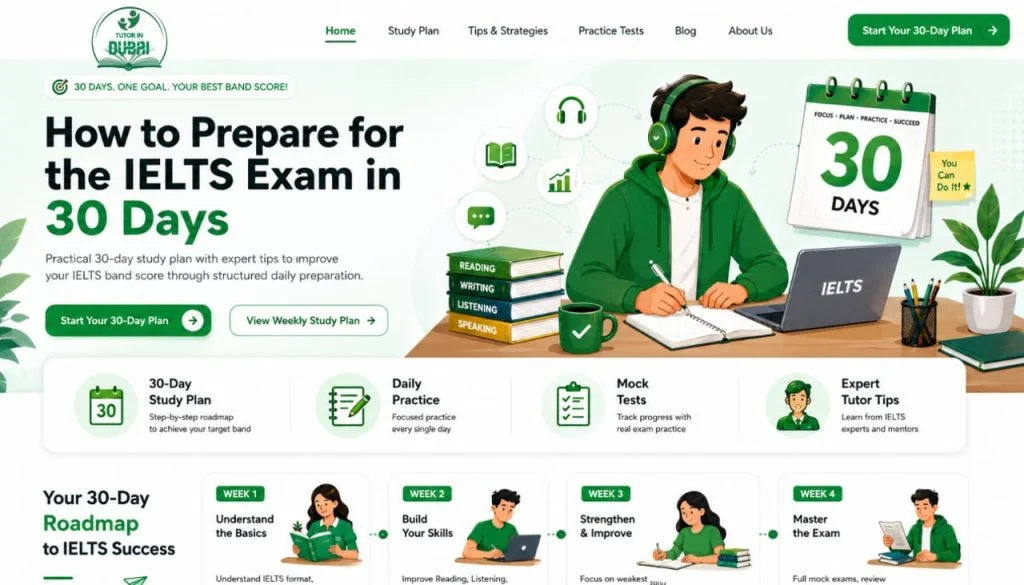
Do you have only one month left before your IELTS exam? Don’t panic. Thirty days can be enough to make meaningful progress if you follow a structured study plan and stay consistent. Many students assume they need several months to prepare, but focused learning is often more effective than long, unplanned study sessions. The secret is knowing what to study, how to practise, and how to avoid common mistakes.
Whether you’re taking IELTS for university admission, career opportunities, or immigration, a smart preparation strategy can help you perform with confidence. Working with experienced IELTS tutors in Dubai can also make your preparation more organised by providing personalised guidance and regular feedback. This 30-day plan will help you stay on track and make the most of every day before your test.
Before You Begin
Before opening your books, take a full IELTS practice test. This gives you a clear picture of your current English level and helps you identify the sections that need the most attention. Make a list of:
- Your target band score
- Your current strengths
- Areas that need improvement
- Number of study hours available each day
Having a clear starting point allows you to create realistic goals for the next four weeks.
Week 1: Understand the IELTS Exam
The first week should focus on becoming familiar with the exam. Learn the structure of each section, understand the question types, and review the official marking criteria. During this week, spend time on:
- Reading different question formats
- Listening to English podcasts and conversations
- Learning new vocabulary daily
- Reviewing grammar rules
- Writing one short essay every day
Avoid rushing into difficult practice tests before understanding how the exam works.
Week 2: Improve Every IELTS Skill
Now it’s time to build your English skills. Dedicate time to each section every day instead of focusing on only one. A balanced daily routine could include:
- Reading newspapers or articles for 30 minutes
- Listening practice for 30 minutes
- Speaking practice for 30 minutes
- Writing one Task 1 or Task 2 response
- Reviewing grammar and vocabulary
Consistency is far more important than studying for long hours once or twice a week.
Week 3: Focus on Your Weakest Areas
By now, you’ll know which section needs the most improvement. Instead of giving every skill equal attention, spend extra time on your weakest performance. For example:
- If writing is difficult, write more essays and ask for feedback.
- If speaking feels uncomfortable, practise answering IELTS-style questions aloud.
- If reading takes too long, work on improving speed and comprehension.
- If listening is challenging, complete more audio exercises under timed conditions.
Many students choose private tutors in Dubai during this stage because personalised coaching helps them overcome specific challenges much faster.
Week 4: Practise Like It’s Test Day
The final week is all about building confidence. Complete full-length mock tests under exam conditions. This helps you become comfortable with the timing and reduces stress on the actual test day. After every practice test:
- Review every mistake carefully.
- Identify repeated errors.
- Revise difficult vocabulary.
- Improve time management.
- Practise speaking with confidence.
The goal isn’t simply to complete more tests but to learn from each one.
Build Your Vocabulary Every Day
A strong vocabulary helps in every section of the IELTS exam. However, memorising long word lists isn’t the best approach. Instead:
- Learn useful academic words.
- Study common collocations.
- Use new vocabulary in speaking and writing.
- Review previously learned words regularly.
Quality is more valuable than quantity.
Don’t Ignore Grammar
Grammar mistakes can reduce your score in both writing and speaking. Spend a little time each day reviewing important grammar topics, including:
- Verb tenses
- Articles
- Subject-verb agreement
- Sentence structure
- Prepositions
Correct grammar makes your communication clearer and more accurate.
Practice Speaking Every Day
Many candidates spend weeks reading and writing but forget to practise speaking. Speaking is a skill that improves through regular conversation. You can:
- Speak in English with friends.
- Record yourself answering IELTS questions.
- Describe pictures or daily activities.
- Practice mock interviews.
Working with private tutors in Dubai gives you the opportunity to receive constructive feedback on pronunciation, fluency, and vocabulary.
Improve Your Writing Through Feedback
Writing becomes much easier when someone reviews your work. Instead of writing multiple essays without guidance, focus on improving one essay at a time. A tutor in Dubai can identify problems such as:
- Weak arguments
- Grammar mistakes
- Poor paragraph organisation
- Repetitive vocabulary
- Incomplete task responses
Making small improvements consistently leads to stronger writing skills.
Take Care of Your Health
Preparing for IELTS isn’t only about studying. Your physical and mental wellbeing also affect your performance. During your preparation:
- Sleep at least seven to eight hours.
- Stay hydrated.
- Eat balanced meals.
- Take short study breaks.
- Exercise regularly.
A healthy routine improves concentration and memory.
Common Mistakes to Avoid
Many students lose valuable marks because of avoidable errors. Try not to:
- Study without a plan.
- Skip speaking practice.
- Ignore writing feedback.
- Learn vocabulary without using it.
- Leave mock tests until the final day.
Avoiding these mistakes helps make your preparation much more effective.
Why Study with the Best Tutors in Dubai?
Although self-study can be helpful, expert guidance often speeds up improvement. Thebest IELTS tutors in Dubai understand the IELTS assessment criteria and know how to prepare students for every section of the exam. They provide:
- Personalised study plans
- Individual feedback
- Mock examinations
- Practical exam strategies
- Motivation throughout your preparation
Professional support can help you make the most of your 30-day study period.
Conclusion
Preparing for the IELTS exam in just 30 days is completely achievable with the right strategy. Instead of trying to study everything at once, focus on consistent daily practice, regular revision, and continuous improvement. Whether you’re working on your vocabulary, strengthening your writing, or building speaking confidence, every small step brings you closer to your target band score.
If you’re looking for experienced tutors in Dubai, learning with qualified private tutors in Dubai can provide the personalised support, expert feedback, and structured preparation needed to maximise your performance. Choosing the best tutors in Dubai ensures you receive practical guidance that helps you walk into your IELTS exam feeling prepared, confident, and ready to succeed.
FAQs
1. Is 30 days enough to prepare for IELTS?
Yes. With a structured study plan and consistent daily practice, many students can significantly improve their IELTS performance in one month.
2. How many hours should I study each day?
Studying for two to four focused hours daily is usually effective, depending on your current English level and target band score.
3. Should I take practice tests every week?
Yes. Regular mock tests help you monitor your progress, improve time management, and become familiar with the exam format.
4. Can private IELTS tutoring help in a 30-day preparation plan?
Absolutely. Personalised coaching allows you to focus on your weak areas and improve more efficiently within a limited timeframe.